
Menu
Work is no longer what it was just a few years ago. In subtle yet significant ways, changes are transforming how work is organized and experienced. In this ever-changing environment, the individual’s role at work is becoming increasingly important
Change does not happen in isolated waves. Digital tools, the rise of artificial intelligence, evolving expectations, and continuous learning reshape work simultaneously also in teaching and other expert roles.
As a result, a key question emerges: how is work managed in everyday practice? Not only at the organizational level, but from the individual and team perspective. How can work be crafted in a way that supports both performance and professional well-being?
Manage your work, not just your workload
Many professionals recognize this situation in their everyday work: you know what should be done, yet it remains undone as work tasks compete and priorities shift
Often, the issue is not competence, but workload.
When the workday becomes fragmented, interruptions increase and attention shifts constantly, focus moves away from what truly matters. At the end of the day, there is often a sense of busyness, but not meaningful progress. “A fuller calendar often means more doing, not more impact”, describes teacher and solution-focused coach Maarit Laiho.
Workload rarely stems from a single factor. It is the result of multiple small demands accumulating: limited time, constant interruptions, and blurred boundaries between work and personal life. Digital work environments often reinforce the feeling that one must always be available.
Additional strain may arise from less visible sources, such as ethical considerations related to the use of artificial intelligence, or the expectation to stay constantly up to date. Multitasking reduces the sense of control, while remote work can simultaneously support flexibility and challenge recovery.
Workload is not merely a subjective feeling. It directly affects how work unfolds, how interactions take place, and how well we are able to learn and adapt. Over time, it also impacts the quality and effectiveness of work.
Well-being as part of professional agency
Work rarely breaks down because we do not know what to do. It breaks down when resources are no longer sufficient to do it.
“Professional challenges are often not about a lack of competence, but about the fact that the necessary resources simply aren’t there", notes Maarit Laiho.
Professional well-being is therefore not separate from work. It is a fundamental condition for effective performance. When we recognize where load accumulates and where focus begins to weaken, we can begin to influence those points where work no longer functions effectively.
Job crafting, small changes that reshape everyday work
Job crafting refers to the proactive ways in which individuals shape their work to better align with their resources, goals, and the demands of their environment. It is not about doing more, but about doing and thinking differently.
Importantly, job crafting already happens in everyday work, often without being recognized. When made visible and intentional, its effects can be significant. Work becomes more manageable, well-being improves, and motivation increases. At the same time, efficiency can improve without increasing workload.
“These changes do not require major reforms, but small, deliberate choices in everyday work”, explains Mervi Varhelahti, a teacher and mindfulness coach.
Job crafting can take place in multiple ways, such as:
- Task crafting focuses on the content of work, e.g., e.g., minimizing impoverished aspects of the work and maximizing the enriched job content.
- Relational job crafting concerns the social domain of work and refers to alterations with whom one interacts and the quality of interaction with others at work, be it co-workers, superiors, or customers.
- Cognitive job crafting involves changes in how an individual employee perceives and makes sense of his or her job.
The goal is not to increase effort, but to increase meaningfulness and functionality.
Digitalization does not automatically reduce workload
Digitalisation, including the use of digital tools and artificial intelligence, offers significant potential for improving efficiency and flexibility. However, without clear practices, they may also increase fragmentation, interruptions, and the sense of constant availability.
The key question is not which tools are introduced, but how they are used. From a job crafting perspective, this involves actively shaping work practices. What should be clarified? What can be simplified? How can tools support rather than burden everyday work?
For example, the use of artificial intelligence may raise uncertainty. When is it appropriate to use it? How should its output be evaluated? Where are human judgement and interaction essential? Job crafting in this context may involve defining clear personal and shared guidelines: when AI is used, how its outputs are reviewed, and when direct human interaction remains central.
At the same time, it is important to recognize that job crafting is not solely an individual activity. It is also a collective process of shaping shared ways of working.
“When practices are made visible and agreed upon both individually and collectively, uncertainty decreases and work becomes clearer”, says Mervi Varhelahti.
Change begins with something small
Work does not change all at once. But a single small adjustment can make a meaningful difference.
✏️ Pause for a moment
What is one small, concrete change you could make tomorrow to support your professional well-being? Linking to this: Job Crafting Exercises and a Guide to Sustainable Well-Being.
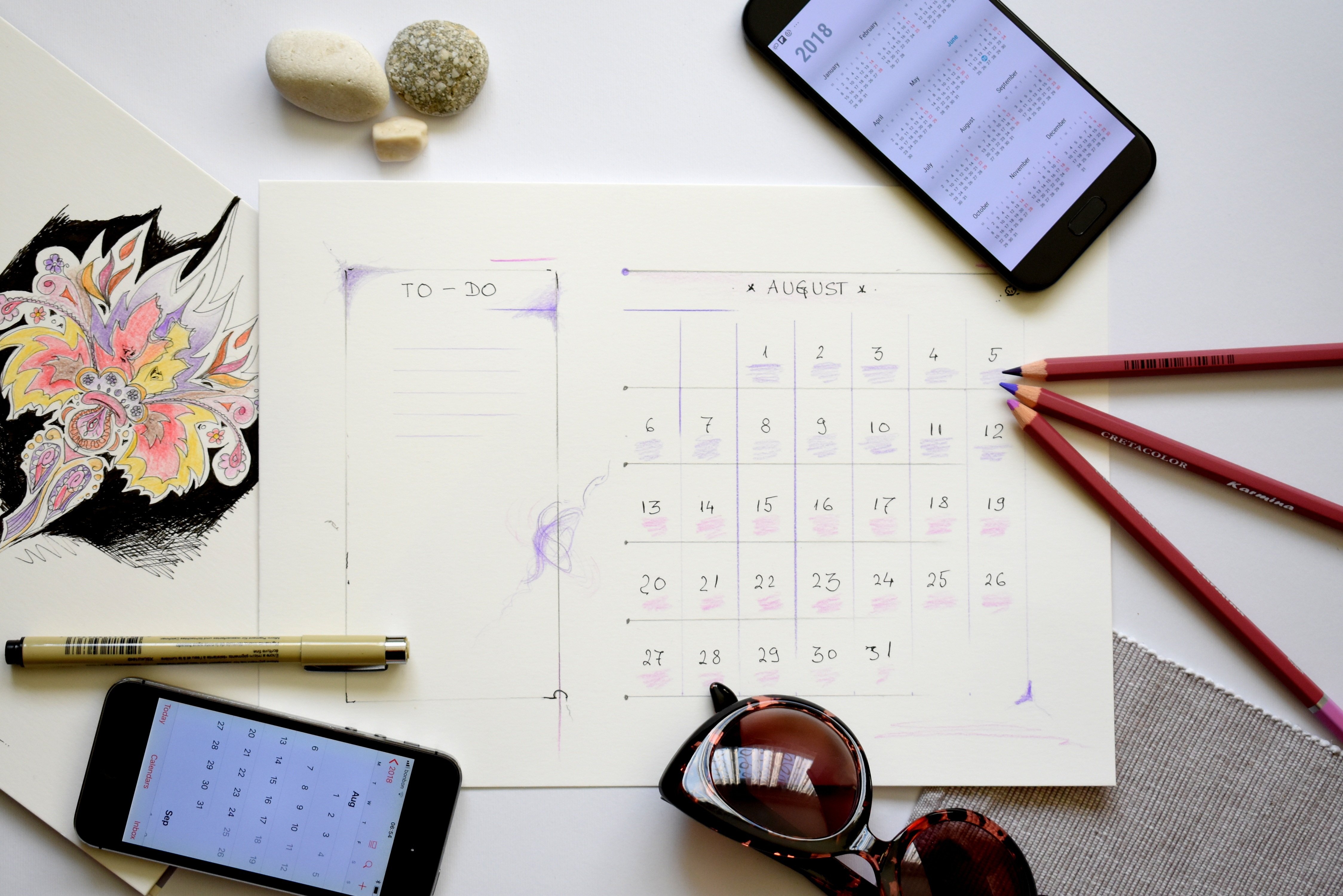
By clarifying, prioritizing, and making more intentional choices in everyday work, the sense of control increases and workload becomes more manageable. This, in turn, creates space for learning, development, and a stronger sense of meaning at work. In this sense, your calendar is not just a schedule, but a reflection of what your work currently consists of and where change is possible.
--
Image Source: Planner Plan Planning - Free photo on Pixabay
Authors: Mervi Varhelahti & Maarit Laiho
Publication Date: 17.06.2026


DISCLAIMER:
Co-funded by the European Union. Views and opinions expressed are however those of the author(s) only and do not necessarily reflect those of the European Union or Fundacja Rozwoju Systemu Edukacji (FRSE). Neither the European Union nor FRSE can be held responsible for them.
We love to hear from you
For information about data privacy, please check the privacy policy.