
Menu
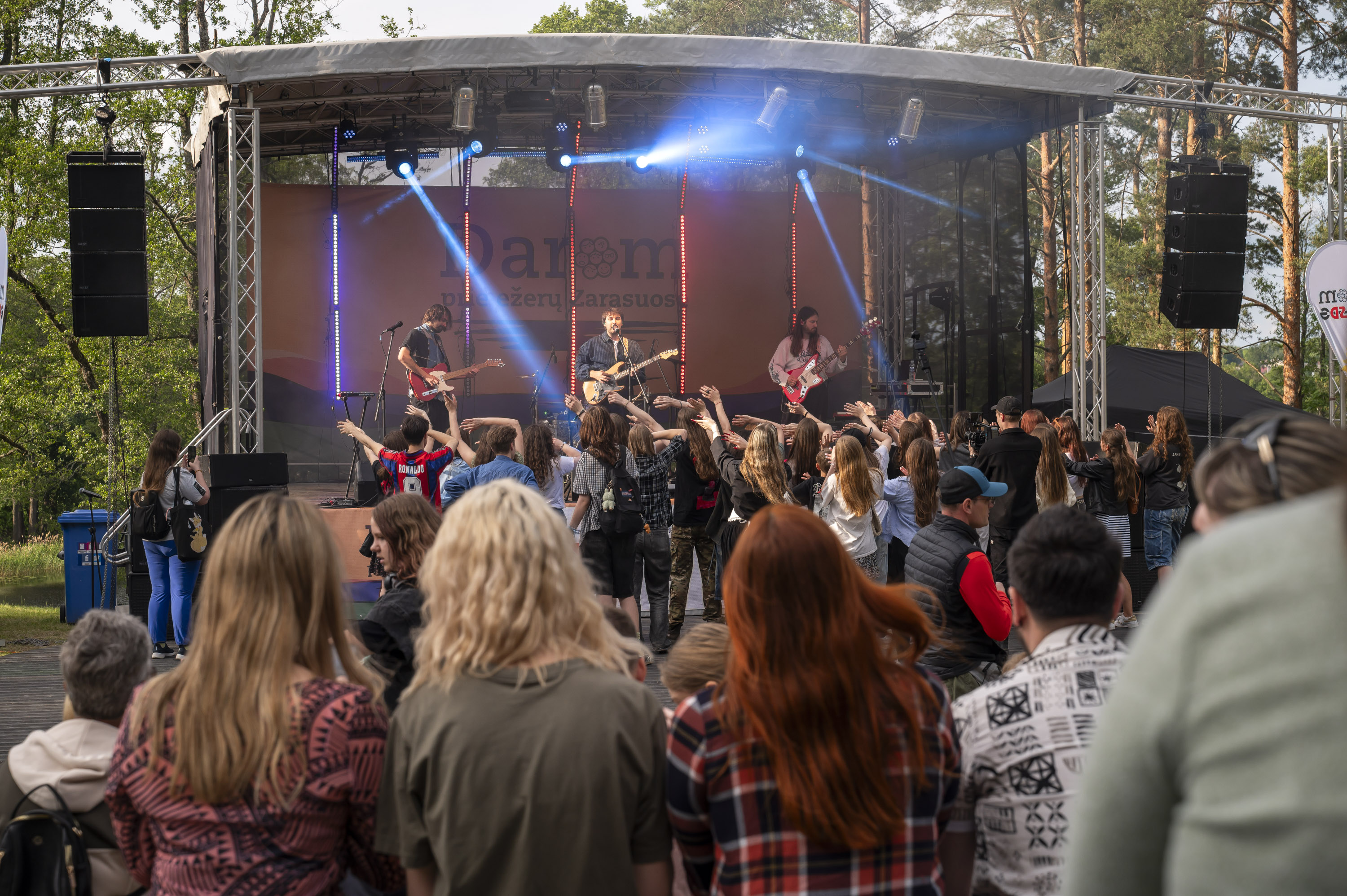
Festivals and public events are usually associated with music, food, conversations, emotions and time spent together. We remember the atmosphere, the people we met and the feeling of being part of something bigger. But every event also leaves another kind of trace — one that is less visible in photos. It can be seen in the waste left behind, the transport choices made by participants, the energy used and the way nature is treated during and after the event.
This does not mean that festivals are a problem in themselves. On the contrary, they can become one of the most effective ways to talk about sustainability. Not through lectures, guilt or complicated rules, but through experience. People rarely change their habits because someone simply tells them to. However, they may start changing when a better choice becomes easy, visible and shared with others.

Sustainability works best when it is experienced
In everyday communication about sustainability, we often focus on what people should stop doing: stop wasting, stop using single-use items, stop polluting, stop consuming so much. These messages are important, but if sustainability is presented only as a list of restrictions, many people distance themselves from it.
Events offer a different opportunity. They can show that more sustainable choices do not have to feel like punishment. Waste sorting becomes much more understandable when it is not just a poster on a wall, but a clear and convenient system at the event. Reusable cups make more sense when participants see that they are easy to use and do not make the experience less comfortable. A discussion about nature protection becomes more memorable when it is connected to a walk, a clean-up activity or direct contact with the place that needs care.
Many environmental problems can feel too large for one person. Climate change, biodiversity loss or pollution often sound distant and overwhelming. But when someone spends an hour collecting litter by the sea, helping protect dunes or learning how to sort waste correctly, the issue becomes more concrete. It is no longer only a global problem. It becomes connected to a place, a community and a personal action.
Festivals as learning spaces
As someone who has been involved in organising environmental festivals in Lithuania, I have seen that people often come for many different reasons. Some come because of a concert, some because they want to spend time with their family, and some simply want to be part of a community event. Not everyone arrives with deep environmental knowledge — and that is completely fine.
This diversity is what makes festivals valuable. They create a space where sustainability can reach people who might not attend a formal lecture or read a long report about environmental issues. At environmental festivals such as “Darom prie jūros” or “Darom prie ežerų”, nature protection, education and culture are brought together in one experience. Activities may include practical environmental work, educational games, creative workshops, hikes, waste sorting initiatives or conversations about more responsible everyday choices.
Similar examples can also be found in other European countries. In Finland, Flow Festival in Helsinki has developed its Sustainable Flow responsibility programme. In Germany, Tollwood Festival in Munich combines culture, music, food and environmental engagement. In Poland, Open’er Festival has an ECO programme that includes waste collection, recycling and ECO volunteers. These festivals differ in size and format, but they show the same tendency: public events are increasingly expected not only to entertain, but also to take responsibility for the impact they create.
From personal well-being to planetary well-being
Sustainable events are not only about reducing waste. They are also about the kind of experience we create for people.
Spending time outdoors, being near water or forests, walking, moving, volunteering and meeting others can support personal well-being. Many people today spend much of their time indoors, in front of screens, moving from one task to another. Events held in natural or semi-natural spaces can offer a pause from that rhythm. They allow people to slow down, notice their surroundings and reconnect with the environment.
At the same time, doing something meaningful together can strengthen social well-being. A clean-up activity, a community workshop or a shared sustainability challenge may seem like a small action, but it gives people a sense of contribution. A child who sees adults caring for the environment may also understand that nature is not just a background for leisure, but something we are responsible for.
In this sense, sustainable events can create a positive loop: people feel better because they spend time outdoors, connect with others and do something meaningful; at the same time, the environment benefits from their actions and growing awareness.
Practical ideas for more sustainable events
Making an event more sustainable does not always require very ambitious solutions. In practice, small details often shape the participant’s experience most directly. Is it easy to find the sorting bins? Are they clearly marked? Is drinking water available? Are participants encouraged to bring their own bottles or cups? Can people reach the event by public transport, walking or cycling? Are local communities involved?

A sustainable event is not necessarily a perfect event. Perfection can even become a barrier, because organisers may feel that if they cannot do everything, there is no point in doing anything. A healthier approach is to ask: what can we improve this time, and what can become a new standard for the future?
Based on practical experience, sustainable choices should be easy: sorting, reusing, refilling and moving around sustainably should be simple and convenient. Communication also matters before, during and after the event. Participants should know what to expect, and after the event it is valuable to share what was achieved.
Education works best through action. Games, workshops, hikes, clean-ups and practical demonstrations often work better than passive information. The success of an event should not be measured only by the number of participants. It is also worth asking: what did people learn, what habits were encouraged, what waste was avoided, what place was improved, what community connections were created?
Celebrating responsibly
There is nothing wrong with celebration. People need moments of joy, culture, connection and shared achievement. But celebration does not have to mean overconsumption. A meaningful event does not need to leave behind piles of waste. It can leave behind new habits, new conversations and a stronger feeling of responsibility.
For me, this is one of the most hopeful things about environmental festivals and similar initiatives. They show that sustainability does not always begin with a big political decision or a complicated technological solution. Sometimes it begins with a simple experience: sorting waste correctly for the first time, joining a clean-up, drinking from a reusable cup or seeing hundreds of people care about the same place.
A festival may last one day or one weekend. But if it is designed thoughtfully, its impact can continue much longer — in the way people think, choose and act afterwards. That is when a festival becomes more than a celebration. It becomes a space for learning, connection and change.
References and examples
Mes Darom. Darom prie jūros – environmental, educational and cultural festival by the Baltic Sea: https://mesdarom.lt/darom-prie-juros/
Mes Darom. Darom prie ežerų Zarasuose – environmental initiative and festival by the lakes: https://mesdarom.lt/darom-prie-ezeru-zarasuose/
Flow Festival. Sustainable Flow responsibility programme: https://www.flowfestival.com/en/flow-festival/sustainable-flow
Tollwood Festival. Festival for Humanity and Nature / environmental commitment: https://www.tollwood.de/en/mensch-und-umwelt/festival-fuer-mensch-und-umwelt/
Open’er Festival. ECO programme: https://opener.pl/en/eco
A Greener Future. Event sustainability guidance, certification and resources: https://www.agreenerfuture.com/
ICLEI. Sustainable Events Guidelines: https://iclei.org/e-library/sustainable-events-guidelines/
--
Author: Edvardas Baltuška, Communications Manager at Mes Darom; Marketing and Communication Coordinator at KTU Institute of Environmental Engineering; European Climate Pact Ambassador
Publication Date: 13.07.2026


DISCLAIMER:
Co-funded by the European Union. Views and opinions expressed are however those of the author(s) only and do not necessarily reflect those of the European Union or Fundacja Rozwoju Systemu Edukacji (FRSE). Neither the European Union nor FRSE can be held responsible for them.
We love to hear from you
For information about data privacy, please check the privacy policy.