
Menu
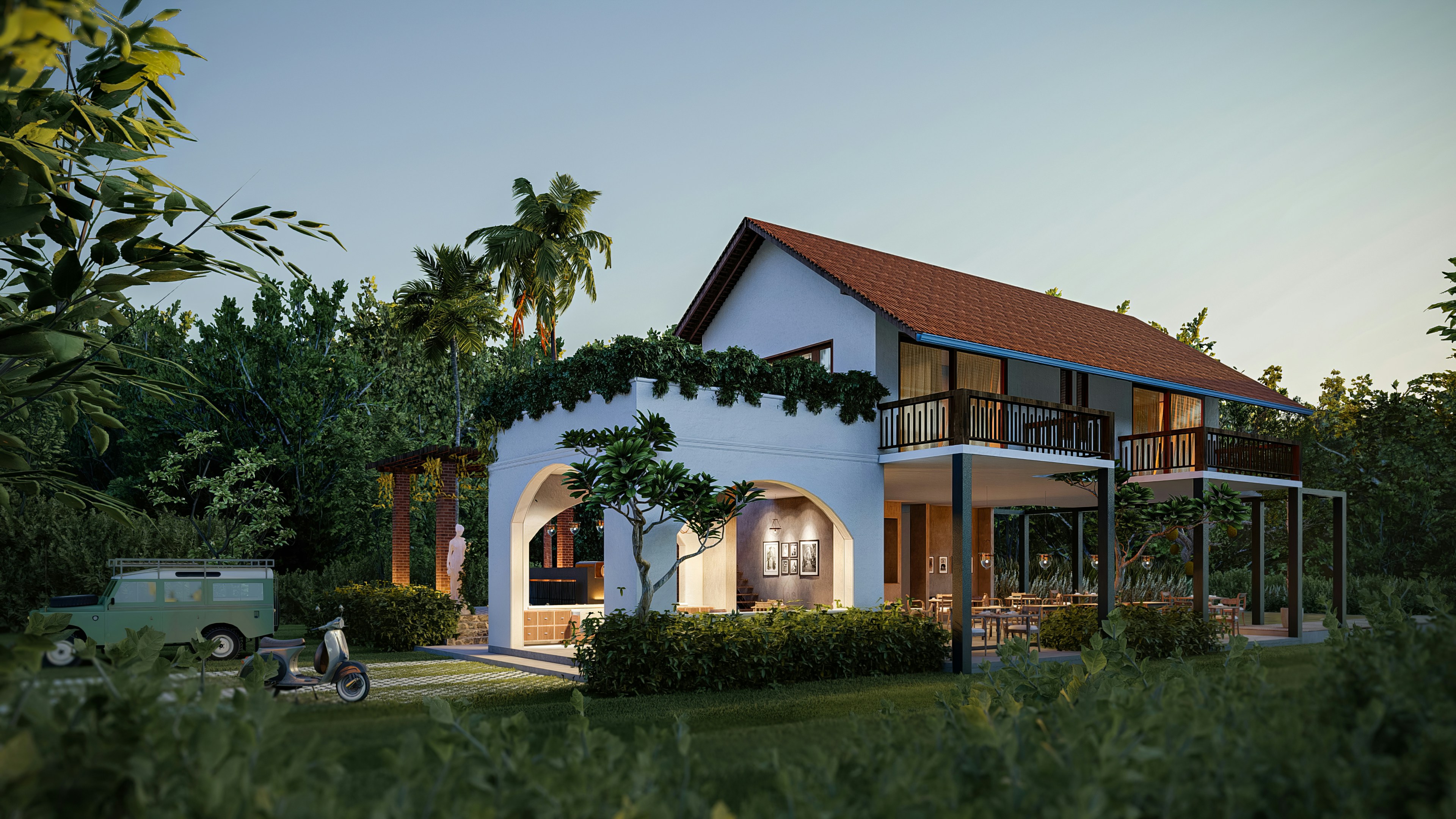
When we look for a new place to live, we usually examine elements such as location, size, price, or the number of rooms we need. We take a look at the floor plan and the photos or perhaps imagine where the sofa and TV will be placed.
But how often do we ask a different question: How will I actually feel living here?
Our homes are the heart of our daily lives. We do a lot of things at home: we sleep, rest, work, eat and spend time with others . And the conditions in which we do all this matter. The World Health Organization points to housing as an important determinant of health, with factors such as temperature, noise, air quality, crowding and safety all playing a role (WHO, 2018).
This idea is also at the heart of HABIscore, a tool created to assess residential well-being. Instead of asking only how attractive or expensive a property is, HABIscore looks at how well it may actually support the people who live there.
Its creator, architect Tomasz Bogusz, puts it simply:
“Good architecture builds the well-being of those who use it.”
Twenty years of asking what good architecture really means
HABIscore was not born from one particular project or sudden idea. For Tomasz, it was the result of a much longer process.
“It wasn't a moment, but rather twenty years of a process. Ever since I started my journey with design, I have been looking for my own answer to what good architecture is.”
Over time, his answer changed. During his studies and later while working in architectural practices, he felt that much of the attention was placed on aesthetics. About ten years ago, he began focusing his own work more closely on well-being and exploring the subject academically.
One thing increasingly bothered him: the gap between the price of a home and the quality of everyday life it offered.
“We pay for the prestige of the location and for marble in the lobby, not for whether we will live well in this apartment for the next twenty years.”
HABIscore grew out of this frustration. The tool scores a property from 1 to 100 across six areas: ergonomics, light, microclimate, acoustics, neighbourhood and nature. Behind the final score are almost seventy individual factors.
The idea is not to define one “perfect” home. It is to make aspects of housing quality that are easy to overlook more visible before we make one of the biggest financial decisions of our lives.
The things we don't think to ask
When I asked Tomasz what people tend to overlook most when choosing a home, his first answer surprised me.
It wasn't the size of the bedroom. Or the view. Or even noise.
It was neighbours.
“Connections with neighbours. Definitely. From a scientific point of view, this is an aspect that has a huge impact on our health and well-being. Yet it is a factor that practically never comes up in conversations about buying a home.”
The research in this area is complex, and we should be careful not to reduce it to a simple “good neighbours make you healthy” formula. Still, reviews of the evidence do show links between neighbourhood social cohesion, social interaction and several health outcomes. A recent longitudinal systematic review and meta-analysis, for example, found that higher neighbourhood social cohesion was associated with lower depression scores (Blair et al., 2026). Earlier reviews have also found generally positive associations between aspects of neighbourhood community life and health, although definitions and measurements vary considerably between studies (Pérez et al., 2020).
This makes the design of shared space interesting. A building can make it easier for people to encounter each other - or easier to avoid each other completely.
Tomasz mentions obvious examples such as residents' clubs, coworking spaces or shared fitness facilities, but also much less obvious design decisions: how people move through a building, how spaces are divided and whether they feel recognisable and easy to navigate.
These may seem like small details. Together, however, they influence whether a building feels like somewhere we simply occupy or somewhere we belong.
What about the light?
Back inside the apartment, there is another element Tomasz believes buyers often misjudge: daylight.
The problem is quite practical. We view a property once, at a particular time of day and in a particular season.
“We view an apartment at noon, in July, in full sunshine and leave convinced that it is bright.”
But the light we experience at home changes throughout the day and throughout the year. And light does more than help us see.
Research has established that light is involved in regulating physiological processes, including our circadian rhythm and melatonin secretion. A systematic review of lighting in the home found evidence connecting residential lighting with physical, mental and sleep-related health, while also stressing that the evidence base is still relatively small and heterogeneous (Osibona et al., 2021). More recent reviews similarly point to the importance of daylight and windows for circadian health, while highlighting how much remains to be understood about the relationship between specific architectural features and biological outcomes (Ardabili et al., 2023).
So perhaps asking whether an apartment is simply “bright” is not enough. It also matters when that light enters the space and how our daily routines fit with it.
That is much harder to judge during a twenty-minute viewing.
Bringing nature closer
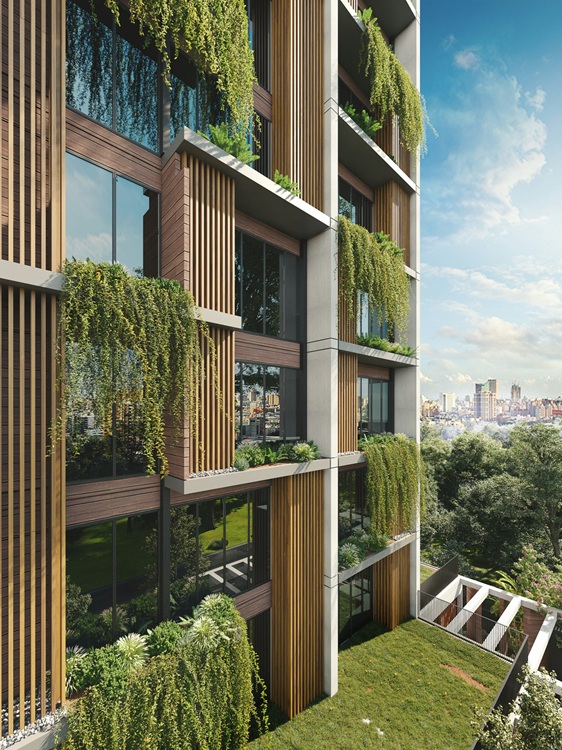
Nature is another important part of HABIscore, and this is where Tomasz speaks particularly strongly about biophilia.
For him, nature should not be treated as decoration added to a building once everything else has been designed.
“Biophilia is an antidote that we should give ourselves in as large doses as possible.”
Tomasz also points out that we don't need to live next to a forest to have contact with nature. It can be something much simpler: seeing trees from a window, having plants around us or using natural materials such as wood in our homes. Even these small, everyday connections with nature can make a difference.
There are studies linking exposure to green space with health. A systematic review and meta-analysis covering 143 studies found associations between greater green-space exposure and a range of health outcomes, including lower salivary cortisol, heart rate and diastolic blood pressure. The authors also noted considerable heterogeneity and limitations in parts of the evidence base, so these findings should not be interpreted as proof that greenery alone causes better health (Twohig-Bennett & Jones, 2018).
Research on bringing natural elements indoors is less extensive, but experimental studies have also explored whether nature-based indoor environments may influence physiological responses to stress (McSweeney et al., 2020).
For Tomasz, however, the practical message is straightforward:
“Not as decoration, but as an element of life hygiene - on the same principle as access to fresh air.”
Well-being doesn't stop at the front door
One of the most interesting things about HABIscore is that it does not assess the apartment in isolation.
What happens outside matters too.
Can you walk somewhere easily? Is there a park nearby? Do children have somewhere to play? Are everyday services accessible without getting into a car? Does the journey from the street to your front door feel safe?
As Tomasz puts it:
“What the world outside our door looks like determines how we spend our time.”
This broader view of housing is also reflected in public-health research and guidance. WHO's housing guidelines explicitly treat housing and health as an issue that reaches across sectors, connecting the quality of homes with neighbourhood conditions, environmental risks and sustainable urban development (WHO, 2018).
And this is where the conversation about personal well-being naturally becomes a conversation about something larger. A home cannot really be separated from the street, neighbourhood or city around it. The design of those places shapes some of the choices available to us every day.
A nearby park does not guarantee that we will exercise. A communal space does not guarantee that neighbours will become friends. Good architecture cannot manufacture well-being.
But it can make some choices easier or harder.
“I didn't think about that”
Perhaps the best way to understand what HABIscore does is through an actual apartment.
Tomasz says the sentence he hears most often after presenting a report is:
“I didn't think about that.”
He remembers a couple, Marta and Wojtek, who were almost certain about an apartment they wanted to buy from a developer. The building was still under construction, so they could not visit the finished property. The apartment had the right size and a south-facing orientation. On paper, everything seemed right.
The HABIscore analysis highlighted several things they had missed. According to Tomasz, the apartment did not receive morning or afternoon sunlight, the bedroom shared a wall with the stairwell, and the garage entrance was directly below the balcony.
None of this information had been hidden.
“That's the essence of the problem for me. It's not that someone is deceiving anyone. It's that there are things you cannot see in twenty minutes and only become aware of after several months of living there.”
In the end, the couple still bought a home in the same development, but chose another apartment, two floors higher and on the other side of the building.
It is a small story, but it captures the idea behind HABIscore particularly well. The aim is not necessarily to label apartments as “good” or “bad”. It is to help people notice what they might otherwise discover only after moving in.
Is well-being becoming part of architecture?
So are architects, developers and cities beginning to take well-being seriously?
Tomasz thinks things are changing, although perhaps not as quickly as the language used to market new developments might suggest.
“For now, well-being appears more often on developers' billboards than in their projects, but the fact itself tells us that something new is coming.”
There is certainly a broader shift towards thinking about housing as a health issue. WHO's housing guidelines explicitly connect improved housing conditions with health, quality of life, equity and climate goals. Research in architecture and environmental health is also paying increasing attention to daylight, thermal comfort, air quality, access to nature and the wider residential environment.
But there is an important difference between putting well-being on a brochure and designing for it in a way that can actually be assessed.
Perhaps this is where initiatives such as HABIscore become particularly interesting. They ask us to look beyond what is immediately visible - the finishes, floor area and impressive visualisations - and think about what living somewhere will actually feel like on an ordinary Tuesday morning, several years after moving in.
Tomasz hopes that this way of thinking will eventually become normal:
“I am convinced that in a few years these will be aspects we consider when choosing a home - alongside location, price and size.”
And perhaps that is the simplest question to take away from HABIscore.
When choosing a place to live, we spend a lot of time asking what it has.
Maybe we should also ask what it will do to us.
References
Blair, D.-L., Eccles, H., Akther, A., Obeegadoo, I., Abud, A., Matic, V., Kingsbury, M., Nykiforuk, C. I. J., Elton-Marshall, T., Kirkbride, J. B., & Colman, I. (2026). Longitudinal studies of neighbourhood social cohesion and mental health: A systematic review with meta-analysis. Health & Place, 100, 103702. https://doi.org/10.1016/j.healthplace.2026.103702
Ardabili, N. G., Wang, J., & Wang, N. (2023). A systematic literature review: Building window's influence on indoor circadian health. Renewable and Sustainable Energy Reviews, 188, 113796.
Pérez, E., Braën, C., Boyer, G., Mercille, G., Rehany, É., Deslauriers, V., Bilodeau, A. and Potvin, L., 2020. Neighbourhood community life and health: A systematic review of reviews. Health & Place, 61, p.102238.
McSweeney, J., Johnson, S., Sherry, S., Singleton, J., & Rainham, D. (2020). Indoor nature exposure and influence on physiological stress markers. International Journal of Environmental Health Research, 30(6), 636–650. https://doi.org/10.1080/09603123.2019.1679357
Osibona, O., Solomon, B.D. and Fecht, D. (2021). Lighting in the home and health: A systematic review. International Journal of Environmental Research and Public Health, 18(2), p.609.
Twohig-Bennett, C., & Jones, A. (2018). The health benefits of the great outdoors: A systematic review and meta-analysis of greenspace exposure and health outcomes. Environmental Research, 166, 628–637. https://doi.org/10.1016/j.envres.2018.06.030
World Health Organization. (2018). WHO housing and health guidelines. Geneva: World Health Organization. ISBN 978-92-4-155037-6. https://www.who.int/publications/i/item/9789241550376
Image 1: Photo by Don Kaveen on Unsplash
Image 2: Photo by Aalo Lens on Unsplash
--
Author: Malgorzata Zieba, based on the interview with Tomasz Bogusz and listed resources
Publication Date: 25.08.2026
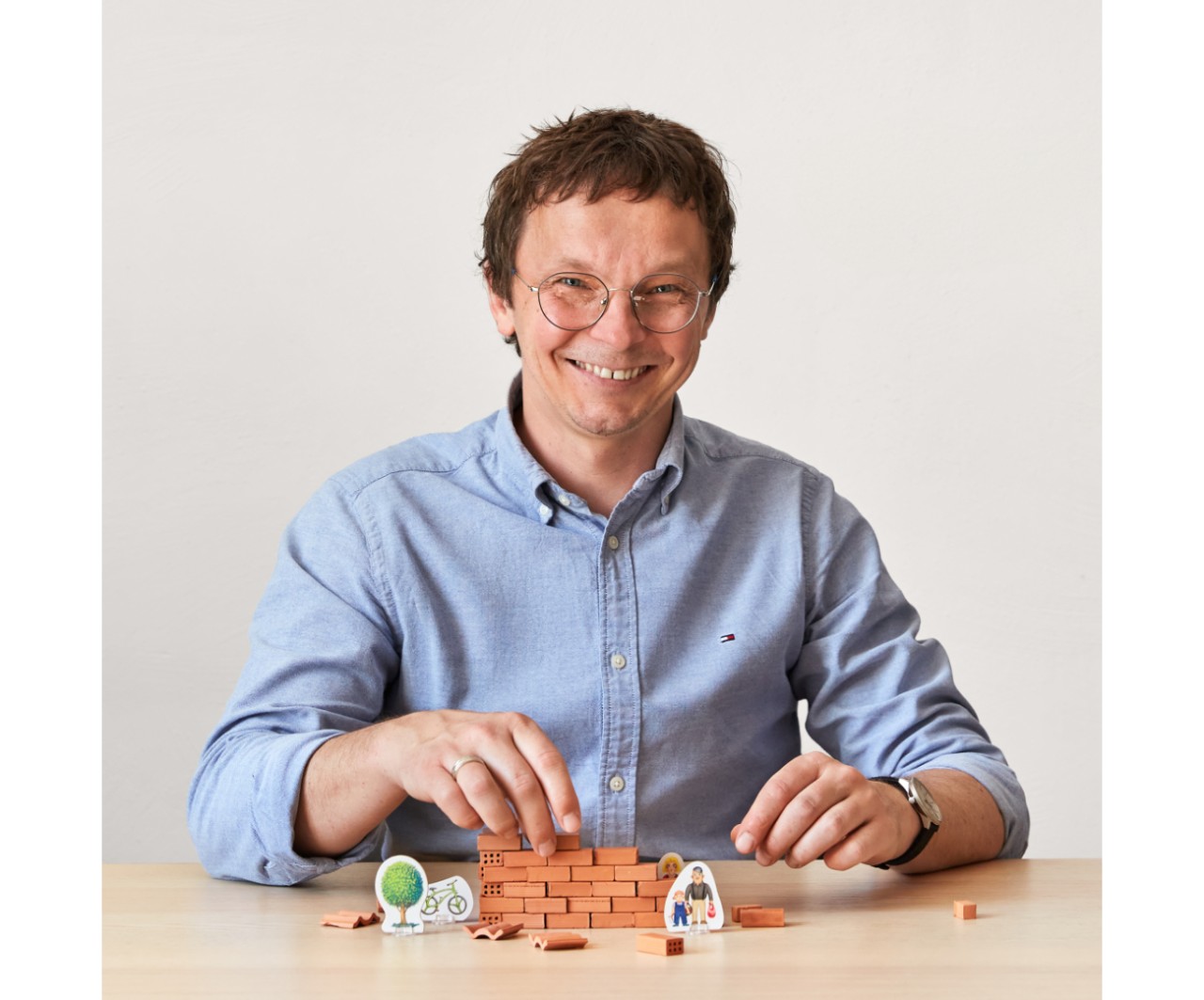
Tomasz Bogusz is a traveler, architect, founder of the HAG Human Architecture Group, which carries out projects in Poland, Tanzania, and the Scandinavian countries, and co-founder of HABIscore. Graduate of the Faculty of Architecture and Urban Planning at Gdańsk University of Technology. In his professional and research work, he focuses on the impact of architecture on the well-being of its users.
LinkedIn profile: Tomasz Bogusz | LinkedIn
More about HABIScore: https://habiscore.pl/en/methodology


DISCLAIMER:
Co-funded by the European Union. Views and opinions expressed are however those of the author(s) only and do not necessarily reflect those of the European Union or Fundacja Rozwoju Systemu Edukacji (FRSE). Neither the European Union nor FRSE can be held responsible for them.
We love to hear from you
For information about data privacy, please check the privacy policy.